

George Saunders on Writing Vigil and the Paradox of Fierce Compassion
And, how our conversation changed the way I revise.

Hello friends,
When I sat down to talk with George Saunders about his new novel Vigil (out today from Random House), I was struck by how often our conversation returned to attention—how we give it, how we avoid it, and how fiction trains us to get curious about what we find uncomfortable. Vigil unfolds over a few hours at a dying man’s bedside, but the questions it raises about free will, responsibility, and compassion, feel expansive and unsettling in the best way.
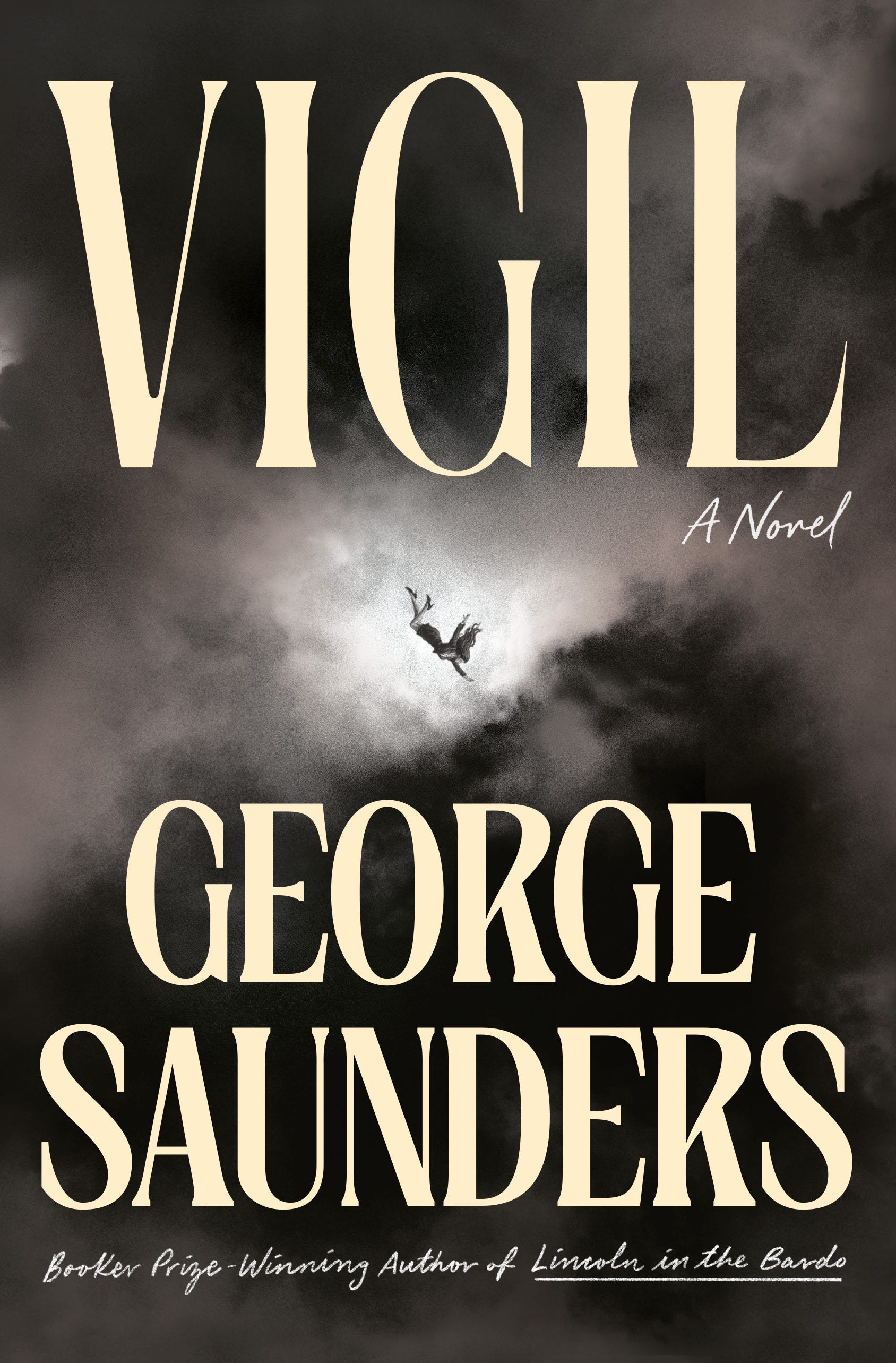
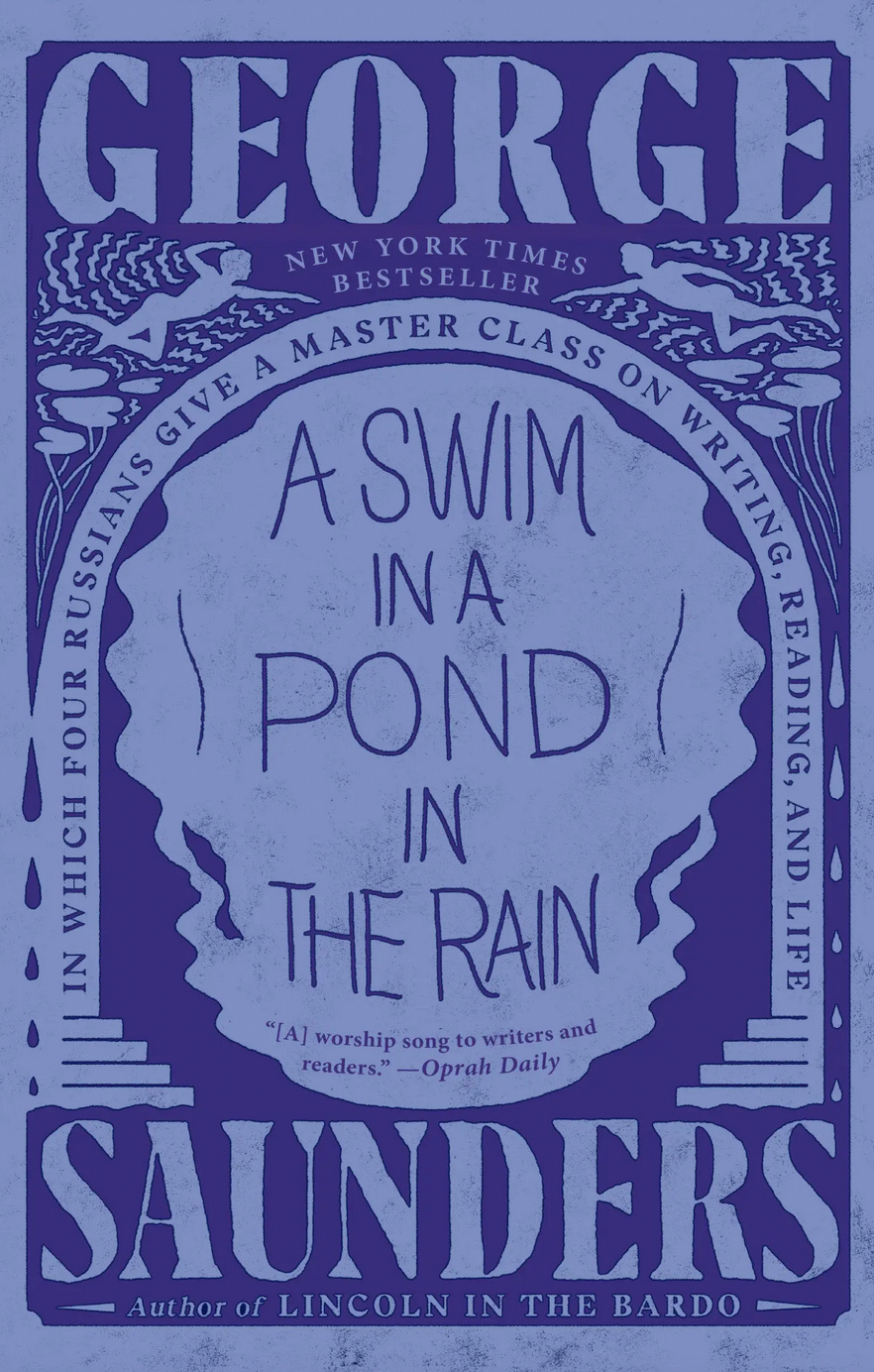
George Saunders is the author of thirteen books, including the novel Lincoln in the Bardo, which won the Man Booker Prize, and five collections of stories, including Tenth of December, which was a finalist for the National Book Award, and the recent collection Liberation Day (selected by former President Obama as one of his ten favorite books of 2022). Three of Saunders’s books—Pastoralia, Tenth of December, and Lincoln in the Bardo—were chosen for The New York Times’s list of the 100 Best Books of the 21st Century. Saunders hosts the popular Story Club on Substack, which grew out of his book on the Russian short story, A Swim in a Pond in the Rain. In 2013, he was named one of the world’s 100 Most Influential People by Time. The National Book Foundation awarded Saunders its 2025 Medal for Distinguished Contribution to American Letters. He teaches in the creative writing program at Syracuse University.
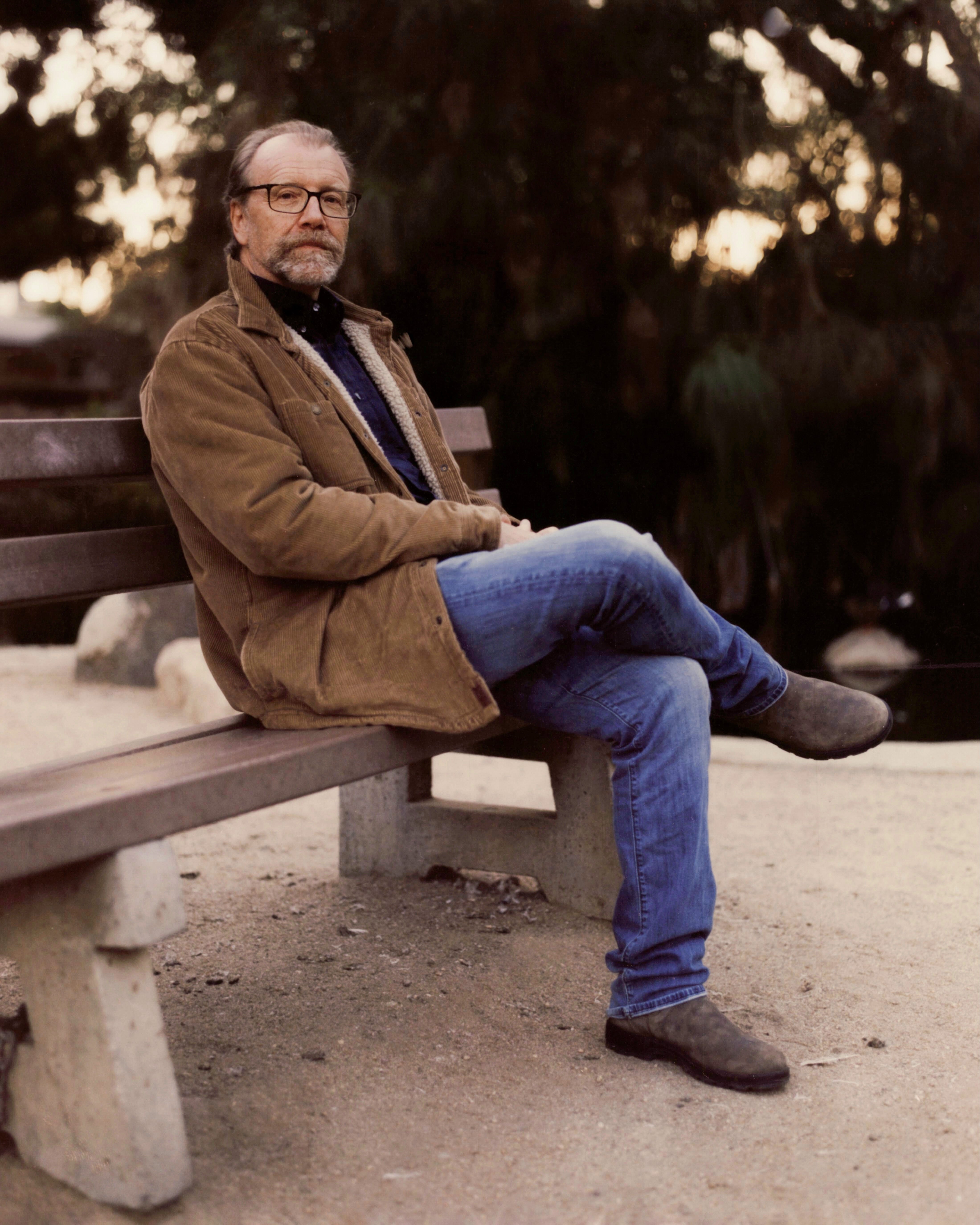
In our podcast interview, George discusses his protagonist Jill Blaine, a ghost and death doula who visits the deathbed of K.J. Boone, a brassy, climate change denying oil executive. George shares the challenges and rewards of writing a character like Boone—“a real stinker” of a man—with both empathy and fierceness. He explores the interface between meditation, writing, and his Buddhist practice, and the value of cultivating a quiet mind in writing and in life. By practicing patience and self-generosity, he says, we allow our characters to surprise us.
Below is an excerpt from our conversation. Listen to the whole interview wherever you get your podcasts. Enjoy!
Yours at the Well,
Tess
Apple podcasts:
Spotify:
YouTube:
George shared how his characters reveal themselves to him:
Tess Callahan: I love the way your character Jill (a.ka. “Doll”) surprises me. I don’t know if that was your experience writing her as well. She announces herself as someone who’s there to comfort—and what is a doll but a comfort, right?—but many other facets of her are unleashed because of what she goes through with Boone. It was fascinating for me to go through that ride with her. She is actually much more complex than she announces herself to be. I just loved her. She’s one of my favorite characters of yours, George, from all of your work.
George Saunders: I love her too. I just got to hear a little sample of Judy Greer, the actress, reading her. And I love Jill even more, because she does it so perfectly. It was really fun for me to sort of see who Jill was. One of the things I noticed in the process of this book is I had to sometimes wait for her to surprise me. There would be draft after draft where she was behaving the way I meant her to, and I’d get to a certain point and just go, “Yeah, okay. Like, I kind of expect more from you.” But I found that I couldn’t force it. I had to just keep coming back to it again and again, and then suddenly, on one occasion, I could see a way that she could be different than I’d imagined her. She could push back, or she could say something kind of rude, or she could let a secret drop that I didn’t know before. I was reminded of how much patience plays a part in this. It’s a patience combined with a self-generosity where I had the experience of reading through a page and going, “Yeah, that’s not quite it—yet.” Not “that’s not quite it because I’m screwing up,” but rather “that’s not quite it yet.” Okay. Just put a pin in there, and hopefully in several drafts from now the thing will get tired of being dull and will show you a way to give it CPR. So that was interesting. And it’s not a very long book, and so I had a real opportunity to dwell in every single passage, maybe over dwell. So, I think it would be like if you have a friend who’s very withholding and quiet, and you just sit across from them and go, “Uh huh.” And eventually they get uncomfortable and blurt something out.”
He talked about Buddhism, his view of Jesus as a novelist, and the power of a quiet mind:
Tess Callahan: Reading Vigil caused a lot of inner dissonance in me, which I consider a sweet spot.
George Saunders: I love that phrase, inner dissonance. Yeah, that’s really good. Because sometimes, especially as a book veers towards the political, it can become a kind of political ad in a certain way. It can just be all good people having the same capital G “Good beliefs.” I think life teaches us otherwise. There are seeds of good and bad and vice versa. To me, that’s the beauty of point of view. You say, “Okay, I’m going to be him.” The quest is to ponder the question: “All right, what does it really feel like to be somebody else, especially someone you disagree with? How do you get there?” The temptation is to assassinate slyly; you know, you can put in a nasty thing about him. But dwelling with this guy (Boone) for all this time, well, it’s certainly possible for someone to see himself as a very likable justifiable person and to do some really bad shit. I think that’s the nature of evil, actually. There’s not too much of the Cruella De Ville variety, where someone says, “Yuh, yuh, yuh, I’m going to be bad today.” So, this (challenge) was great. I loved it. As a Buddhist and as a former Catholic, it’s the thing I’ve been thinking about since I was a little kid. When Jesus confronted that woman at the well he was able to, it seemed to me, absorb her phenomenon and treat her so compassionately. How did he do that? Even as a kid, I got the message that he was a novelist in that way. He had a nice quiet mind, and he was able to meet her where she was. I always thought that was a beautiful thing.
Tess Callahan: And that is the work of the novelist, right? That’s the opportunity of fiction—that we can be so intimate inside another being’s consciousness in a way that no other art form really offers us.
George Saunders: Yes, and in a way that we can’t do in daily life because we’re rushing past that idiot. Ha-ha. But the other thing that this book made me think about, and of course I’ll carry it into the next one, is I had to say to myself: Now be careful because I’m claiming that Jill is—and I think I’m claiming that I am—inhabiting Boone’s consciousness—but he’s invented by me. And so, there’s a certain kind of distortion field that can happen. When I imagine someone, or you imagine someone, you can’t get clear of your own phenomenon. So, I wonder what it would really be like to inhabit, say, the mind of a sociopath? Are there just things that we, not being sociopathic, can’t imagine? So, I’m a little cautious about that. You know, I think fiction makes a lot of hay about the illusion of inhabiting someone else’s mind. But I wonder, if I went into the mind of the real-life K.J. Boone, whoever that might be, would there be tones there that really surprised me because I couldn’t imagine them?
Tess Callahan: Yeah, it’s an interesting question, but the endeavor, I think, is a holy one.
George Saunders: I think you’re just right, because for the writer, for sure, and hopefully for the reader, that dissonance you talked about—that’s very productive, because life is full of so many blind spots. And one of the things the mind seems to do, even if you’re very neurotic like I am, is constantly assure you that you’re okay—you’re right, you’re doing it good, you’re all there, you’re the hero of the story. And sometimes that dissonance when we read fiction is where your habitual way of thinking runs up against the facts, and sparks go off. If that happens once a day, it’s pretty good.
George shared the joys of Story Club, a Substack that grew out of his book on craft, A Swim in a Pond in the Rain:
Tess Callahan: I highly recommend Story Club, your Substack, to any listener. It’s such a joy! I think there must be three of you, George, for all of the output you offer there, the incredible generosity. I’m just amazed that you’ve written a novel at all.
George Saunders: Thank you for being there. It’s so much fun. I’m so gratified. The people who show up there are just incredible. And no snark. It seems like any topic we get on to, somebody has an amazing life experience that speaks to that. It’s great. I think I started off thinking I had to be really smart and give lecture after lecture, but now I just feel like I’m hosting this party with all these really gifted people. You ask: what do you think about this? And you get this beautiful flood of intelligent responses. It’s encouraging. I mean, I get into my usual dread after watching the news, and then you go in there and you’re like—Okay, that’s complicated, because these are a lot of good people, and they’re earnest, and they’re trying hard. It’s been a real, real joy.
My conversation with George changed the way I revise.
I’ve begun to ask: What frame of mind am I in as I sit down to write today? How will this “mind-weather” influence the way I revise? If a passage feels off, can I muster the “self-generosity” to put a pin in it, wait it out, and let it reveal itself in its own time? Is my mind quiet enough to make room for the wildly unexpected?
I’m grateful to George for the depth and delight of this conversation. I’ll be thinking about it for a long time.
Listen to the full interview on Apple, Spotify, or YouTube.
Join George on Story Club!
Catch him on his book tour: https://georgesaundersbooks.com/tour/.
The audio version of Vigil is read by Judy Greer and Stephen Root with MacLeod Andrews, Kimberly Farr, Mark Bramhall, Barrett Leddy, Eric Jason Martin, Karissa Vacker, Sunil Malhotra, Cassandra Campbell, Kimberly M. Wetherell, Aaron Goodson, Maggi-Meg Reed, Marni Penning, Rebecca Lowman, Matt Godfrey, Fred Berman, Kirby Heyborne, Ann Marie Lee, Danny Campbell, Vas Eli, and George Saunders.
Thank you for supporting my work!
Explore my novels Dawnland and April & Oliver.
Follow my Meditation Podcast on Apple, Spotify or Insight Timer.
Reading this right now!
Brilliant interview, Tess. Thank you so much for sharing. I love Saunders' creative writing and also how he talks about the creative process. Your interview came at the perfect time, too, as my bookclub is picking out a book to discuss next month. After delighting in your interview, I texted my bookclub to suggest we read Vigil together. Everyone instantly chimed in -- yes!