

Paula Saunders on Moving Forward by Going Back
“Integration of our past experiences is the work of our lives.”

Hello friends,
With great delight I welcome to Writers at the Well novelist Paula Saunders, whose deeply moving new novel Starting from Here is out today from Penguin Random House.
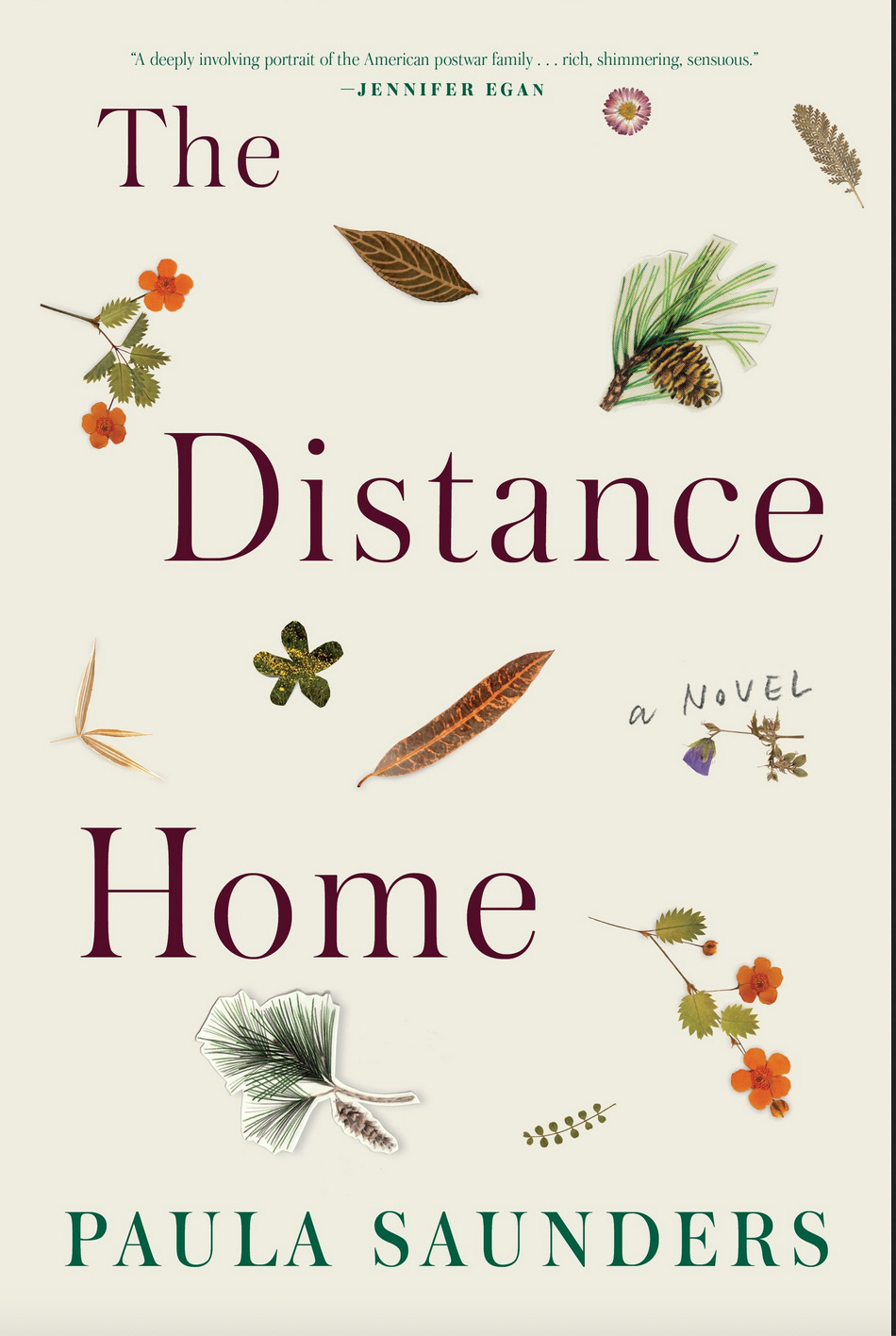
Paula Saunders grew up in Rapid City, South Dakota. She is a graduate of the Syracuse University creative writing program, and was awarded a postgraduate Albert Schweitzer Fellowship at the State University of New York at Albany, under Schweitzer chair Toni Morrison. Her first book, The Distance Home, was longlisted for The Center for Fiction First Novel Prize and named one of the best books of the year by Real Simple. She lives in California with her husband. They have two grown daughters.
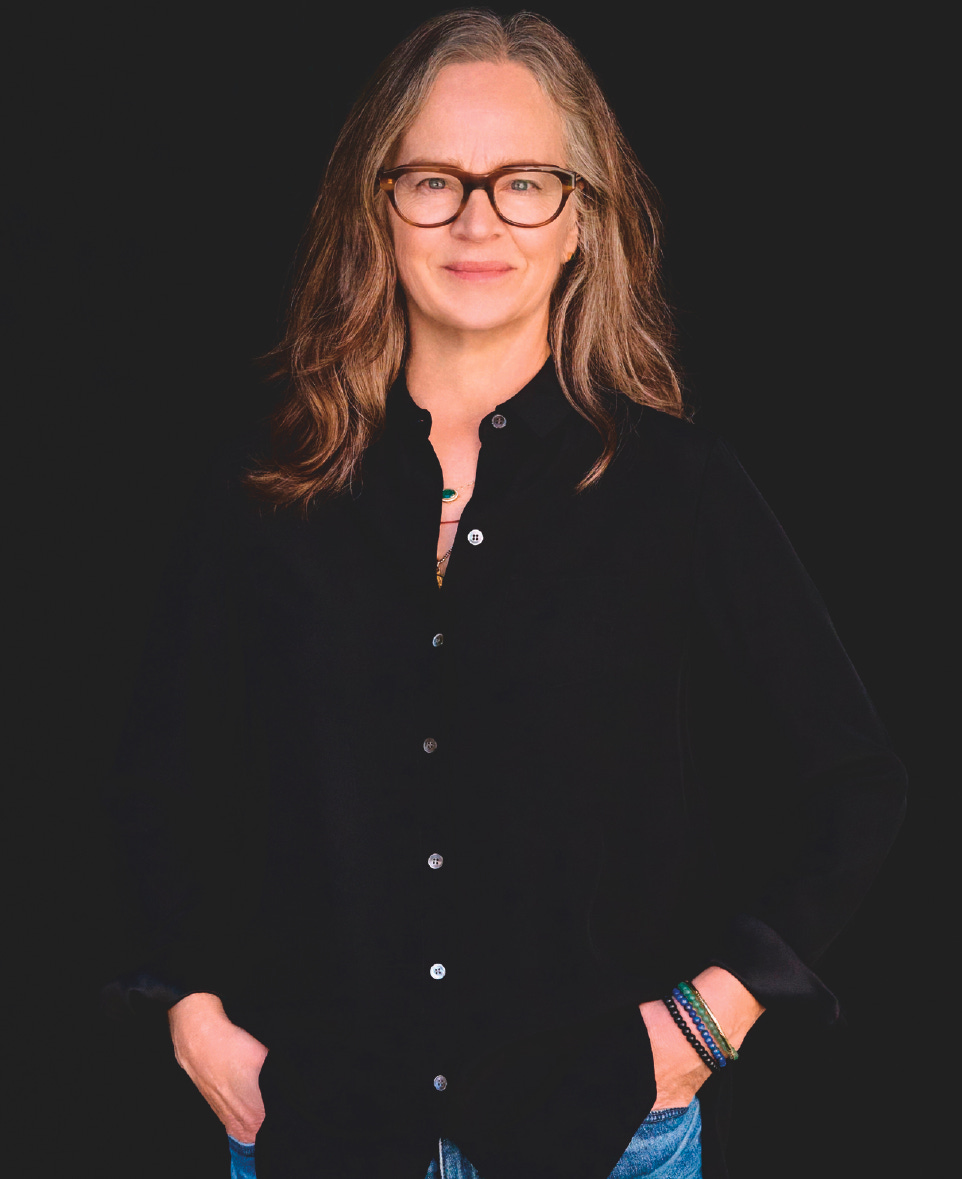
In this conversation, Paula shares her experience of writing to illuminate her past, the art of going back to move forward, and remaining open to life as a series of perpetual beginnings.
In addition to this written conversation, Paula and I did a podcast interview in which she delves more deeply into her process, her Buddhism, and how writing has deepened her compassion toward her family and herself. You can find that conversation on Apple, Spotify, or wherever you find podcasts.
I hope you enjoy this interview as much as I did!
Yours at the well,
Tess
Based on your family history, Starting from Here, like your first novel, The Distance Home, is a classic bildungsroman. What moves you to write from life? What did you find difficult or rewarding about crafting a stand-alone sequel?
The Distance Home is the larger story of René’s family. In that first novel, the point of view moves around between the characters, and I hope there’s some sense of the trajectory of the entire family as the story moves forward, up to and including the deaths of every family member except René and Jayne. Nevertheless, the actual storyline ends with René, at 15, leaving home. So, in Starting From Here, I wanted to pick up René’s story and follow her exclusively, without changing point of view.
I was (and am) very interested in the journey we all have to take in moving from young girls to young women, especially in a patriarchal culture that doesn’t value the confusions and challenges inherent in this passage. It was very interesting to look at this young girl, René, now on the cusp of womanhood, trying to face everything on her own, away from home and without the support of her family. It seems to me that her isolation highlights the cultural forces that play on all young women. Even her artistic journey becomes yet another force we come to see as intertwined with the cultural pressures of success and failure, redemption and damnation.
And maybe most important, I need to quote from something that was said by an elder to Medicine Woman Patricia James, descendent of the Seminole Tribe and a priest in the Cheyenne tradition: “If you can’t bring back what you experience and incorporate it into your life, you’re being a dilettante.”
So, integration of our past experiences is the work of our lives. I guess this is my way of trying to do that work.
“Saunders brilliantly captures the richness, awfulness, and blooming exhilaration of this girl’s life… A beautiful novel.” ~ Claire Messud, author of This Strange Eventful History
In the novel’s opening pages, René reflects on a childhood memory of dancing with her brother: “And as she spun through rotations she never could have managed on her own, the world was reduced to a single point of light. Everything quiet… Was there anything else like it on earth? There was not.” This passage gave me a thrilling glimpse of what it must feel like to be a trained dancer or a whirling dervish! Can you share your own experience of dancing or other moments in life in which you felt “reduced to a single point of light”?
Dancing was always a wonderful pursuit for me. It gave me a way to settle my mind and divorce myself from the turmoil of my family. It gave me a place to experience the kind of union of inner and outer space that we can sometimes get a glimpse of in meditation – that place where we feel reunited with ourselves and whole.
And in dancing, for me, it was a whole body experience. The concentration required, the attention to the finest details, demanded everything I could come up with, all focused into a single glimpse of the present moment, in trying to control it and manage it and perfect it.
So, maybe I’m a control freak (some would say, haha), but I loved it. It was magic to me.
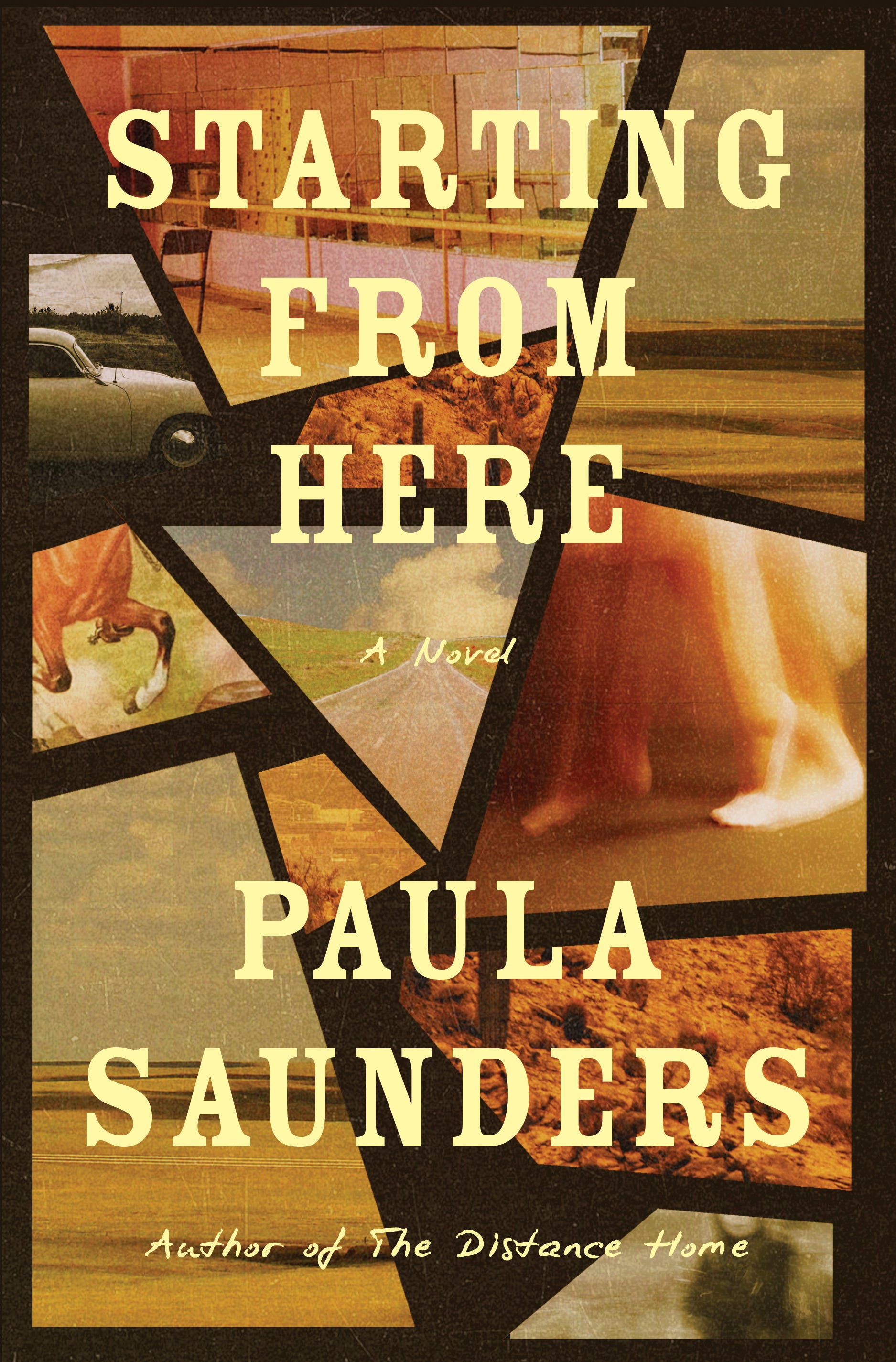
René is sent to Phoenix to make something of herself, to “spin straw into gold,” and to become the token fulfilled person in the family—a big burden for a 15-year-old. What is the salient personality trait that helps her navigate this challenge?
I think René understood the need to get away from her family. That’s a big part of it. She needed to get out from under that. And ballet was her avenue for leaving. But, at 15, she couldn’t have known what the costs would be, she couldn’t have anticipated any of what might happen to a young girl given over to face the world on her own. And the pressure from home came both because of the overall financial pressure on Eve and Al, and also (kind of the same thing but different) from their socio-economic class.
As I’ve gotten older I’ve noticed that often when there’s a talented child in the family, if the child needs to change location in order to pursue her chosen art form, either the mother will move with her, or the whole family will move to support her in her pursuits. But I’ve seen this only in families with means and, I might add, education. So that’s the big difference. Someone with the financial means to support a child in her artistic pursuits, and someone who understands the inner workings of this kind of pursuit, is in a completely different category than someone willing to simply turn their child over to another family, even if they think it might be for the best.
And to finally answer the question more directly, what René needed most of all, I think, was the steely determination and grit that she seemed to have been born with. She needed that confidence, that certainty about what she wanted to get her through the hard times – along with her understanding of what returning home might mean for herself and her family, which had, in a way, put everything on the line for her. So there has to be a need to keep going, and there has to be a determined willingness to try.
You write, “To those René had left behind, … her departure must have seemed like a boon, a windfall, like something out of a picture book where a princess gets to escape from a locked turret and float, groundless, into some starry night.” By contrast, we see, in the words of reviewer Mary Karr, that “the lonely young woman is half-starved, pawed at and preyed upon, seduced, rejected, and since her body is her instrument, she is ruthlessly judged.” René and her parents perceive different realities. Can you speak to how such contrary perceptions function not only in families, but, more than ever, in the nation?
I’m not sure I can speak to the nation. What’s going on in this country is, to me, unspeakable. I literally cannot find words for it aside from ordinary ones that don’t really explain anything— "horrific,” “criminal,” etc. For me, it’s like crazy-town in this country every day. But then I have to remember what kind of country are we, what we’ve been and how we got here: slavery, the slaughter of Indigenous peoples, expansion at all costs, Vietnam, corporate deification, the defunding of education, the endless conquering and exploitation of the earth and of people, especially the poor. There seems to be plenty to explain what’s happening today. We just don’t like looking at it. But I have to admit, even so, that there’s been a fundamental shift. We didn’t side with Germany in WWII. And suddenly we are there, on the wrong side of all the most fundamental questions.
But for this family, yes, there are things to be said. It’s interesting to me how ones’ stake in something will often determine ones’ perception of it: like how Eve feels it’s best to proclaim that everything’s fine when things are clearly not going well. Of course, there’s an element of distance – Eve’s far away, so she doesn’t have the benefit of direct perception, and when she finally comes around to understanding, it’s too late. But then there’s also a way in which Eve is right: if René is going to leave home to pursue her idea of becoming a dancer, she’s going to have to endure things she wouldn’t have to endure at home. And enduring whatever arises is the only way she’s going to accomplish the outcome she wants.
Also, there’s the problem of envy. The line you quoted refers mostly to the problem of looking at someone else and seeing what they seem to have in the light of what you don’t have. Who wouldn’t want an opportunity like René has in leaving her hometown to pursue her dreams? The rest of her family will never have that kind of opportunity. In letting René go, Eve has given her a chance at so many things the rest of them will never have a way to experience – the heights of artistry, the worlds that open with education, the realms of artistic sophistication – in short, all the good things that will come to make up her world. All of which doesn’t mean that René isn’t, moment to moment, fighting for her life.
“Saunders wowed me with her psychological acuity in her debut, ‘The Distance Home,’ and this new offering exceeds that jewel. Brava!” ~ Mary Karr, author of The Liars Club and Lit
Colorful and often dangerous characters walk through the storyline—creepy dads, spiteful girls, lascivious DJs, hack teachers, and predatory cult leaders. In adapting your own life to fiction, did you sometimes collapse several figures into one, change the order of events, or take other measures to heighten the sense of escalation and momentum?
I’m sure I did this, but I’m not sure that I’m actually aware of doing it. Memory is such a tricky thing. I could never claim to be remembering exactly or even somewhat accurately. Yet, I did follow the patterns of memory I seem to carry around with me, whether true or false. And I worked through it that way.
The most important thing working with memory does for me is it forces me to look at what I remember as my experience more carefully and, especially, from different angles.
For example: When I started working on this book I think I was holding a grudge against the Eve character. Let’s say, I kind of had it in for her. But, through the process of endless revision and addition and deletion and rethinking, I came to a larger understanding of what Eve’s experience might have been—how much strain she would have been under, having her talented young daughter leave home, and her son so traumatized and neglected that she had to constantly worry about him, and her husband always ready to do battle, and a new business she was trying to get up and running, besides dinner to make and clothes to wash and a house to clean. I could go on and on.
But the writing of this book helped me to expand my understanding—not just of the external things Eve did, but of how all these things must have felt to her—which changes the memories somewhat, softens them and makes them larger, more inclusive and more expansive.
I actually remember the very moment in the writing when this happened for me. It was after Leon had been on a tear, then home to recuperate, then was leaving once again with a friend, and Eve waved goodbye to him, came back inside, sank down onto the steps and said, “I think I’m going to be sick.” When I wrote that, it was like a slap in the face. It broke me down, and I saw it – all that I’d refused or neglected to see before.
You touch upon a universal experience with the line: “René had learned that it was sometimes best to move through the days without seeing what you were seeing, hearing what you were hearing, or feeling what you were feeling.” How we see this happening in our culture right now! Can you talk about a time in your life when you consciously did an about-face—chose to see, hear, and feel—despite the cost?
I think I was always ready to see and hear and feel what was going on around me, which is likely what made me want to be a writer. At home when I was a kid, I was often called “the preacher.” Which was kind of making fun of me but also kind of true. When something was wrong, I’d be the one to argue the point. I’d leave my mother notes, explaining what I’d seen or heard or felt and how it might need to be addressed.
There’s a great Czeslaw Milosz quote I read somewhere: “When a writer is born into a family, the family is finished.” And maybe that was me. Oh, my.
Though in the section of the book you mention, when René is in Phoenix, she needed to use the skill (can I use that word in this context?) of disassociating to simply to stay on track and pursue her dancing. I know dissociation has a bad rap these days, and I agree with that. It would be best if we could all stay whole and integrated. Of course.
But sometimes, there are things that have to be put behind us so that we can move forward. And maybe moving forward will take us to a place where we’re ready to address those things with more power and stability. I imagine that’s what I’m trying to do in my writing – move forward by going back.
“Paula Saunders has written an ode to coming-of-age, independence, and transformation that is also an evocative time capsule brimming with memory and feeling.” ~ Meg Wolitzer, author of The Female Persuasion
With her brother Leon gone, René finds the house, “… peaceful, the way an ICU is peaceful—peace and quiet as both a respite and a matter of life and death.” Can you reflect on the notion of false peace?
False peace. I think there’s a place for it. In this section of the book, René is quite grateful for it. It’s good when warring parties decide to stop interacting. That means no more war. Not peace, but not war. It reminds me of when we get in a fight with a loved one. Sometimes the best we can do is take a walk around the block, to get away and cool off before making things worse.
Ideally there would be peace that springs from love, understanding, compassion. But when this is not available, I think false peace is the better option. That doesn’t mean it doesn’t take a toll. It only means that one might find the space in it for some solitude, a way to breathe. And I think that’s what René is grateful for, just that extra space to let herself breathe and relax and recover
“The sharp physicality of Paula Saunders’s writing hooked me; it was utterly engrossing to feel chills, hunger, and lust through the body of this young dancer...” ~ Miranda July, author of 'All Fours
Your writing is painterly and vivid, such as this detail from landlady Mrs. Babbitt’s Thanksgiving meal, that included: “…an avocado half on each plate, the seed pocket filled with half mayonnaise and half ketchup.” Did you have fun with your descriptions? Was there more joy in writing this book than your first one?
I have such a great time with descriptions. And this gives me a chance to say a little bit about my process. I rewrite. I rewrite endlessly. I’m a completely obsessive rewriter.
That’s the first point. So I think my descriptions don’t just happen, they’re built—which is something I love doing. It’s so hard (for me, maybe not for others), but it’s one of the most delicious challenges of writing. I remember writing that description of the white butterflies flitting among the weeds at the end of the Denver section again and again and again, for months. Trying but not capturing what I wanted, trying to make the language work when it was constantly getting all tangled up. It was crazy. In the end, I hope I got it. But, who knows? I tried. And had a great time doing it.
“[René] sat on Janet’s front steps, looking off into the distance like she was trying to see into the future. Pale white butterflies were flitting atop the weeds now blossoming in Janet’s front yard. And though it sometimes seemed that they were falling—flapping, tumbling end over end—they were simply flying, diving down and coming up again. Which is what she’d been doing, too, she figured—just beating her way through the air, like everyone else.”
I think one of the things that was so pleasurable about that particular description was that I knew deep down that it was worthwhile. And I could feel it right there, on the edge of manifesting each time I went through it. I just had to work it into existence. I can’t explain the joy of it. It’s so difficult and so exhilarating. Thank you for noticing.
What are you currently drawing up from your well? Will we see more of René? What can readers expect from you next?
At the end of Starting From Here, we leave René in yet another state of beginning. I like this, especially because, aware of it or not, it seems we’re always in a state of beginning. So, here she is again, ready to take off. And I guess that’s what the title’s about. We’re always starting from wherever we are.
I hope there will be another novel somehow following René through the next section of her life. I have pages, but I’m not sure how this will happen. Just like I tried to move from using multiple points of view in The Distance Home to using a single point of view in Starting From Here, I’m hoping to come up with a way to approach the new work that both matches the trajectory of the story and inspires me to write it.
What can I say? Here's hoping…
We hope so, too! Catch Paula on her book tour his fall. Learn more about her work at paulasaundersbooks.com. Follow her on Facebook, Goodreads and Instagram.
FORTHCOMING INTERVIEWS: Carrie Birde, Martha Cooley, Andrew Holecek, Suzanne Mettler, Juan Pablo Mobili, Lynne Sharon Schwartz.
RECENT INTERVIEWS: Karen Dukess, Brooke Lea Foster, David Hicks, Holly Kennedy, Jill McCorkle, Askold Melnyczuk, Laura Munson & Samra Zafar.
Thank you for supporting my work in whatever way suits you:
Like, Share, Comment, Subscribe.
Explore my novels Dawnland and April & Oliver.
Follow my Meditation Podcast on Apple, Spotify or Insight Timer.
Great interview, Tess, as always. You and Paula are an awesome duo. LL