

Susan Donovan Bernhard on the Things We Don't Talk About—and What Happens When We Do
Westerly explores sisterhood, motherhood, and the cost of inherited silence.

Dear friends,
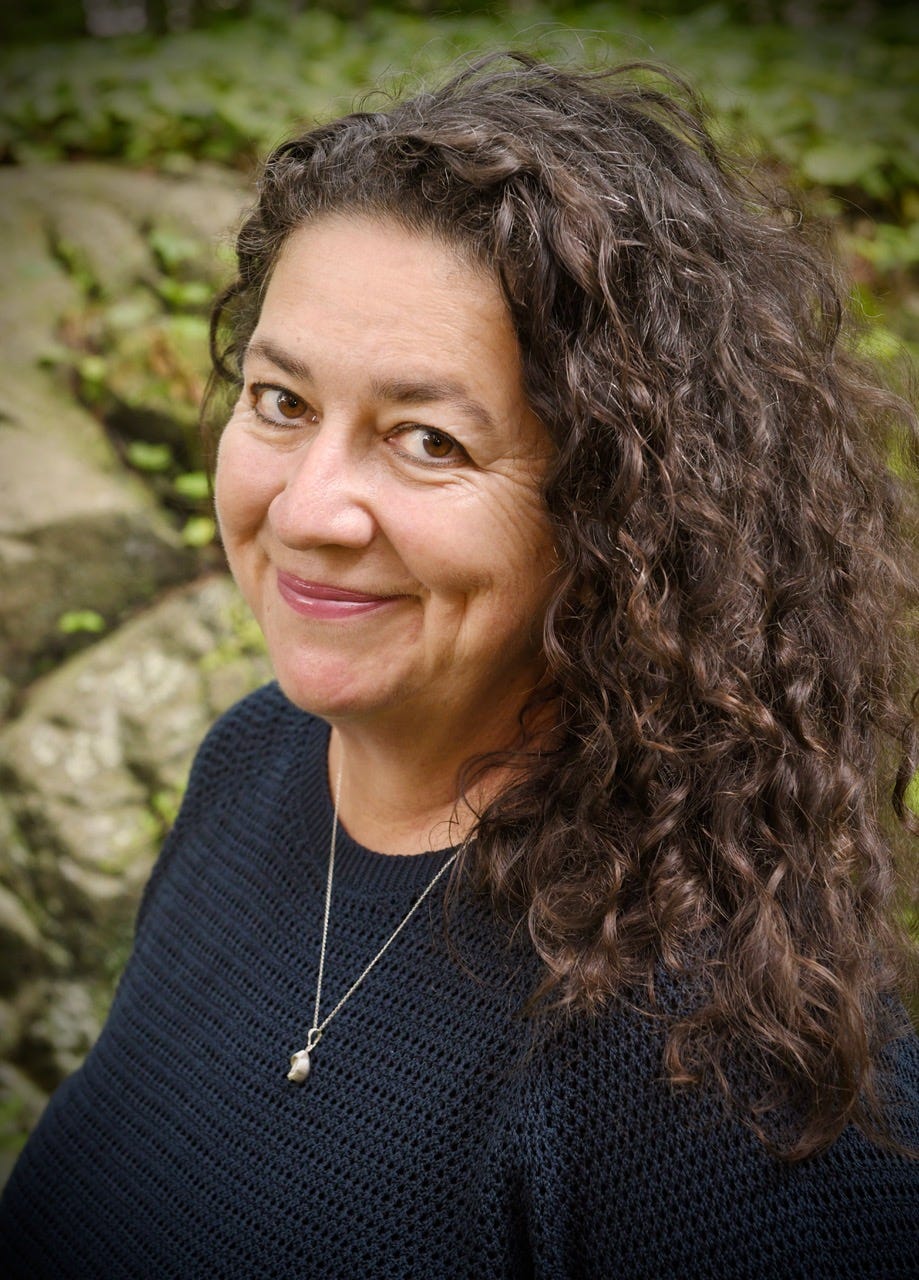
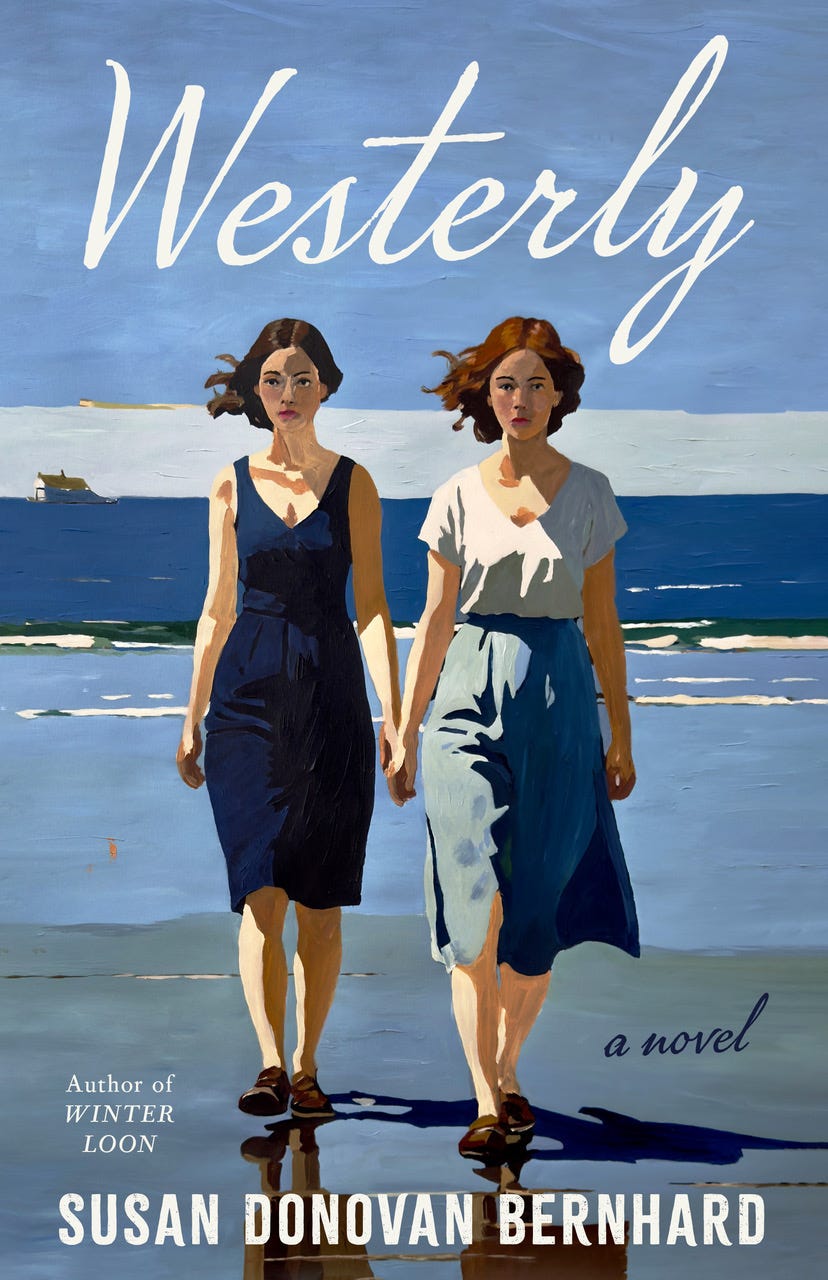
With great delight I welcome to Writers at the Well Susan Donovan Bernhard, whose new novel Westerly is just out.
Susan shares how a chance encounter led her to feverishly scribble the first scenes of Westerly after a near sideswipe in the Wicklow Mountains. She discusses the challenges and rewards of crafting a novel that spans five decades, multiple points of view, and shifts in tense. Is it any coincidence that her next book will cover only 48 hours?
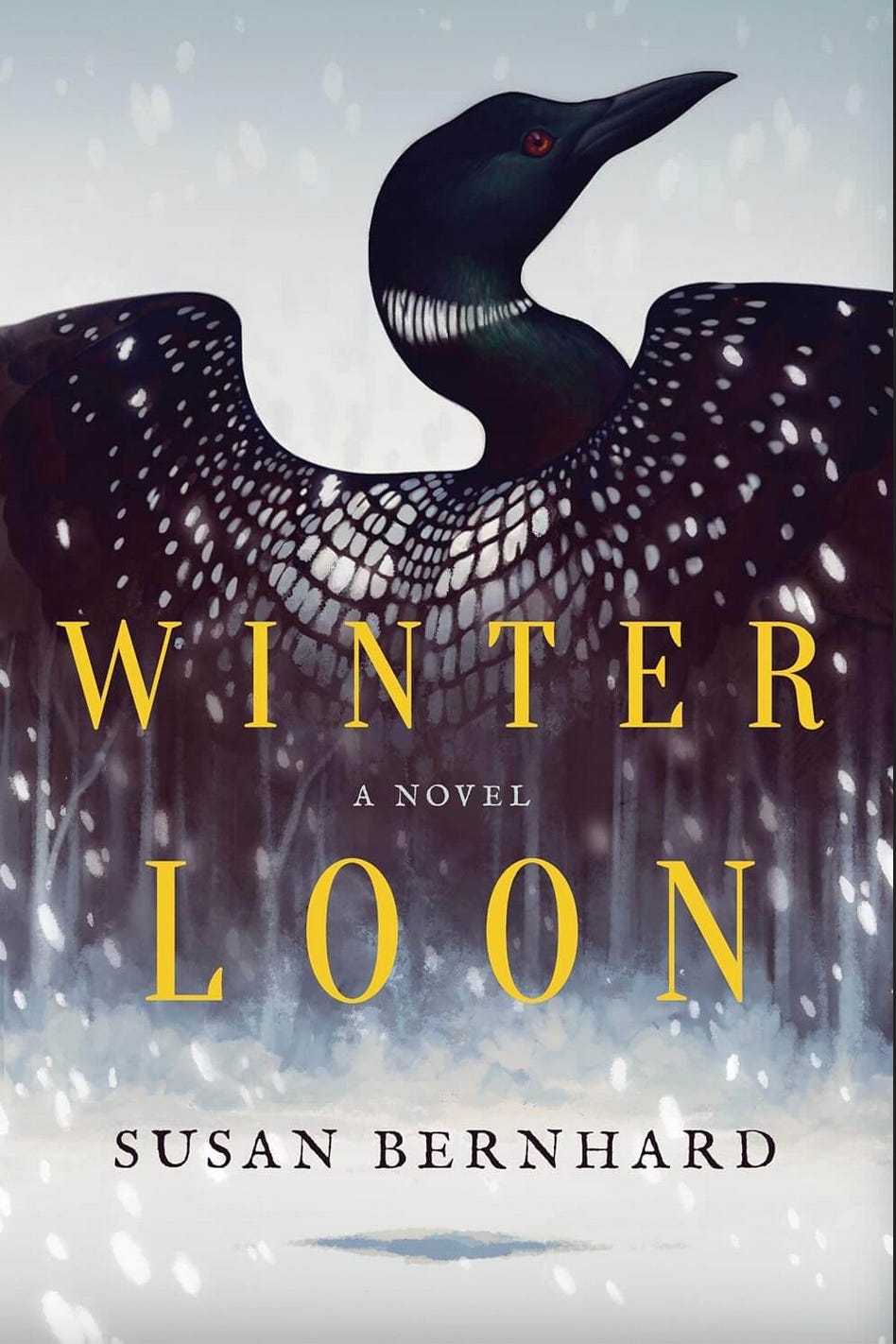
Susan Donovan Bernhard is the author of Winter Loon, an Amazon bestseller and winner of the Boston Authors Club Julia Ward Howe Prize for Fiction. She is a Mass Cultural Council fellowship recipient, a GrubStreet Novel Incubator program graduate, and a Tennessee Williams Scholar to the Sewanee Writers’ Conference. A dual citizen of the United States and Ireland, Susan was born and raised in the Bitterroot Valley of western Montana and graduated from the University of Maryland. When she’s not traveling, she lives and writes in Massachusetts.
Enjoy this rich conversation about craft, forgiveness, and the tangled lives of sisters.
Yous at the well,
Tess
“An absolutely beautiful story of choosing honesty and forgiveness over secrets and shame." —Heather Aimee O'Neill, Bestselling author of THE IRISH GOODBYE
Westerly is set in motion by an accident that takes place after two German refugees girls are placed into an Irish foster home as part of Operation Shamrock, a post WW II initiative to find homes for orphaned children. How did you learn about Operation Shamrock and what moved you to write about it?
I was in Ireland visiting family in 2019, navigating through the Wicklow Mountains on our way to a hiking spot in Glendalough, a little lost. We nearly sideswiped another driver on the narrow road. She motioned for us to roll down our window and told us about a place, not far from us. The Glencree Centre for Peace and Reconciliation. That was the first time I’d ever heard about Operation Shamrock. We only stopped briefly but I snapped a photo of an information graphic before we continued on. By the time we got to the trailhead, two little German sisters had already started tapping away at me. I imagined them stepping off a bus, fresh from war, wondering what sort of place this Ireland was and what might be in store for them. I waved my husband and my son off and sat by the roadside in a rental car and wrote a scene that would eventually become Westerly.
Two sets of sisters stand at the heart of Westerly—Gisela and Elizabeth; Maeve and Molly—relationships that are depicted with depth and complexity. What drew you to write about sisters? Did the exploration surprise you?
I have two sisters, though the elder of the two passed away in 2023. They were both at least as far apart in age from me as the gap between Maeve and Molly. As a little girl, I longed for their approval, especially from the sister closer in age to me. Like Molly, I felt a sense of abandonment when my sister left home. Earlier drafts had scenes a little closer to my reality than what ended up in the novel. When sisters are close, that bond can be so powerful. But when there’s a rift, the tear goes deeper than we might at first realize. I’ve experienced that power and pain firsthand and certainly that’s reflected in the sister relationships in Westerly.
“A masterwork of storytelling.” —Katherine Sherbrooke, author of LEAVING COY’S HILL
Westerly explores the corrosive effect of secrets over time. Lies beget lies in a spiraling drama. At the root of each secret is a terrible dark shame. What drew you to this theme? Do you write to gain insight, to understand, heal or redeem?
We all carry our secret shames. Little transgressions I hide or at least don’t share are my own burdens to bear though I wonder how I might have hurt people inadvertently or how something I might have said or done had an outsized effect on another person. It’s probably the lapsed Catholic in me—looking for forgiveness for what I’ve done or what I’ve failed to do. In writing, most of my characters are trying to sort themselves out, to understand what it is that is lurking inside or what seed might be in there waiting to crack open and become something entirely new. I do really love to write hurt people. Oh, that makes me sound cruel. But, you take a character like Conor O’Kane in Westerly, imagine his shame or transgressions, imagine the pain of his losses, the implied price he paid with his family for rash behavior or callousness. Not to say someone like Conor O’Kane couldn’t have become a better man, but it’s also no wonder that he turned out the way he did. So while I was hoping for redemption for the Sullivan women, I feel like I gave Conor a moment there at the end, where maybe the reader could understand him a little more.
Westerly follows Faye Sullivan through three cycles of her life—maiden, mother, crone. Your first book, Winter Loon, follows teenage Wes Ballot over a condensed period of his life. What challenges and opportunities did you discover in writing a book that spans five decades?
Oh Tess! It was so hard! When I started to understand the scope of the story I wanted to tell, I was so daunted. I did enjoy discovering Faye’s journey and I think it took all those phases of her life for her to get to the point where she could see that she was no more able to take full responsibility for decisions she made as a girl than Maeve or Molly were. It took me several drafts to get to the heart of those decisions, how the trauma of war was so seminal in how she yearned for safety above all else and how she ended up creating an illusion for Maeve and Molly that it was better to bury secrets and shame than to confront them. I don’t blame Faye. She was part of the silent generation that just didn’t talk about anything. I wrote her with that in mind. Reading characters over five decades does require an understanding of where and when each character comes from. I actually had a key reader suggest Molly could simply “get over” the childhood trauma she experienced as a result of the secret Faye kept. Like, what was the big deal anyway? I was shocked by that comment. And then, a cultural sensitivity reader suggested that Molly would need therapy (within the narrative) to even survive what she had experienced. I’m sure Molly would have benefited from therapy but she was not from a place or time or people for that matter who might have offered that. None of the Sullivan women had the tools or language that a woman might have now to express herself or confront her demons.
In terms of craft, I had a long (boring) scene of Molly trying to get a passport. It was almost like I didn’t quite trust the reader in those early drafts to sort out how a person gets from here to there. I had to be ruthless with myself and not include every detail of every day in every life, to let readers fill in the blanks, or this novel would have been a thousand pages long. It was a learning experience for sure but I think it made me a better writer. But, I will have you know that my next novel covers a whopping two days!
With the notable exception of Conor O’Kane, the male characters in Westerly—Thomas, William, Sam, Leo, and Jem—are kind, devoted, even-keeled men, unlike the father and grandfather figures in Winter Loon. Do you model your characters off real life figures? How do they come to you?
I’d had my fill of difficult men after Winter Loon and Westerly is very much the story of Faye and her daughters. I had an image of William as kind of a cross between a young, idealized version of my dad and—don’t laugh, now—but Brian Keith who played Bill Davis on the old television show “Family Affair.” His demeanor, like the other characters in Westerly, is entirely fictional. When I was a little girl, my dad had a friend of sorts named Denis O’Brien who became kind of lore in our family. The rumor was that he was in the IRA. He and my dad got really drunk one night and played records on the phonograph in our living room. I was a little girl and that’s a fuzzy, fuzzy memory. I can’t recall much about his appearance other than that jacket and maybe dark hair. Conor O’Kane is like a cross between Denis O’Brien and Arnold Friend, the villain of the Joyce Carol Oates short story, “Where Are You Going, Where Have You Been?” Thomas was an ideal, a kind and devoted man who loves poetry. The part about the cold cuts in the coat pocket, though, was drawn directly from real life. My husband’s grandfather fed seagulls scraps he kept in a barn jacket. He was a quirky man in his old age.
Part I of Westerly is written in the past tense from Faye’s point of view. Part II includes both daughters’ POV, and Part III switches to present tense with a roving POV. Can you share how these subtle but precise choices serve the unfolding story?
Part of the challenge of writing a novel that takes place over such a long stretch of time was trying to keep the narrative from getting stale. The multiple points of view and the particular attitudes that those lenses allowed made the writing more interesting for me as well. When I got to Part III, most of the time all three women are together and it made sense to let them bounce off each other a little more freely. It wasn’t anyone’s story in particular at that point so the shift to more omniscience and the present voice felt right as pieces started falling into place.
“An utterly beautiful achievement.” —Marjan Kamali, internationally bestselling author of THE LION WOMEN OF TEHRAN and THE STATIONERY SHOP
In both Westerly and Winter Loon, the inciting incident involves a tragedy on water. Can you talk about your own relationship to water and the meaning it holds in your work?
I didn’t make a strategic decision to have another water tragedy become one of the inciting incidents in Westerly. Maybe I drowned in a previous life. I love being near the water but I don’t like how deep it is, what’s lurking down there. I’m fascinated by big waves but also terrified of being swept away. And, after a few weird situations, I don’t always feel safe being on a boat. I might need therapy.
Westerly asks us to consider the true nature of forgiveness. Do you have a personal take on how forgiveness comes about, and when or whether it is warranted?
I went back and forth with this question trying to come up with something profound and generous. But, the truth is, I might not be the right person to talk to about forgiveness. My dad was a master grudge-holder so I learned from the best. And now the buried Catholic in me is thinking about sin and those weekly visits to the confessional! It’s such a tough concept, forgiveness. But what I landed on is that forgiveness requires a relationship, it’s a baton that’s passed back and forth before the race is run. Maybe forgiveness benefits the person doing the forgiving most but asking for forgiveness—regardless of whether it’s granted—is equally powerful. Asking implies a recognition of not just the egregious act, but a reckoning with the scope of harm. The story of the Sullivan women in Westerly is about the conversation of forgiveness—asking, granting, accepting, and reconciling. But it’s about the journey to self-awareness first.
“… a warm, deeply felt, immersive read. —Caoilinn Hughes, author of THE ALTERNATIVES and ORCHID & THE WASP
You can find Susan at: https://www.susanbernhard.com/
Join us Saturday June 20, 2026 at 6pm East End Books in Provincetown, MA where I will be interviewing Susan in person. Our discussion will also be available via livestream. You can also catch Susan at one of her other upcoming events:
BELMONT BOOKS with Diane Les Becquests, Thursday, June 25, 2026, 7:00 PM
The G.O.A.T. Books and Goats Day of Wonder at SUNFLOWER FARM, Saturday, June 27, 2026, 11:00 AM - 3:00 PM
BOOK ENDS with Kimberly Hensle Lowrance; Tuesday, July 7, 2026, 7:00 PM
Milwaukee Irish Fest; Fri-Sun, Aug 14-16, 2026, 4:00 PM 6:00 PM
Check out my recent interviews with Andrew Holecek, George Saunders, and Karen Dukess. Stay tuned for upcoming conversations with Pulitzer Prize winning playwright and novelist Ayad Akhtar—whose work you may know from Disgraced or Homeland Elegies and debut novelist Hallie Shepherd.